

From Siloed Reporting to Collaborative, Continuous Planning.
Board brings finance, operations, and commercial teams onto a unified AI Continuous Planning Platform, so scenario modeling, forecasting, and planning is optimized for confident decision-making across the enterprise.
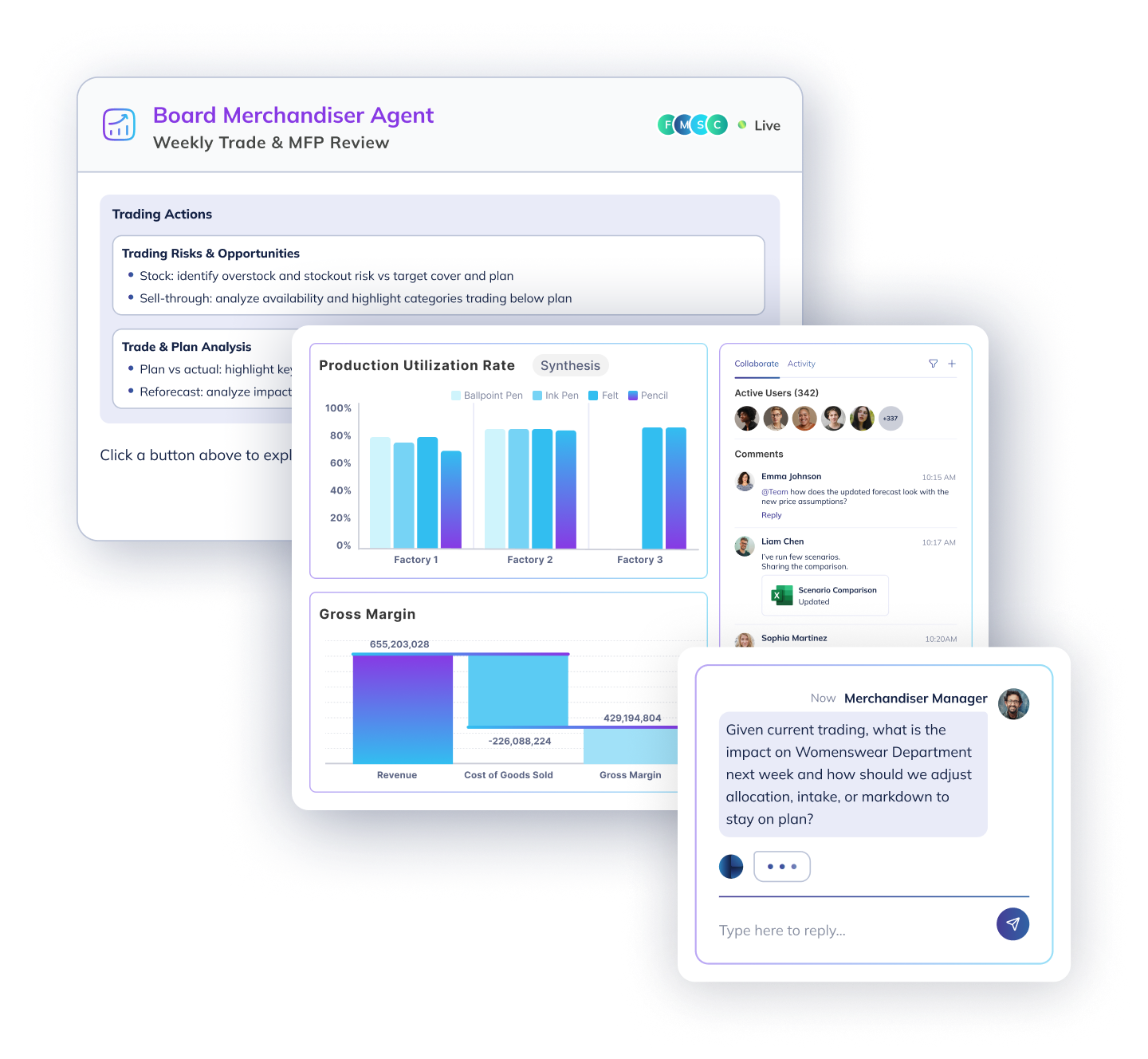
Every organization talks about collaboration. Few achieve it in planning.
Finance works in one system. Operations in another. Commercial teams rely on spreadsheets. Assumptions drift, numbers diverge, and alignment happens late through manual reconciliation.
The issue is not communication. It is the absence of a shared planning experience.
Board brings your teams together in one intuitive platform, with shared data, models, and workflows, so planning, forecasting, analysis, and decisions happen in one unified system.
A unified planning experience, not disconnected tools
Most platforms force a trade-off between usability and scale. Board eliminates that trade-off.
It delivers a domain-grade planning experience that combines:
-
The familiarity of spreadsheets
-
The power of multi-dimensional models
-
The governance and scale of an enterprise platform
This is what makes real collaboration possible.
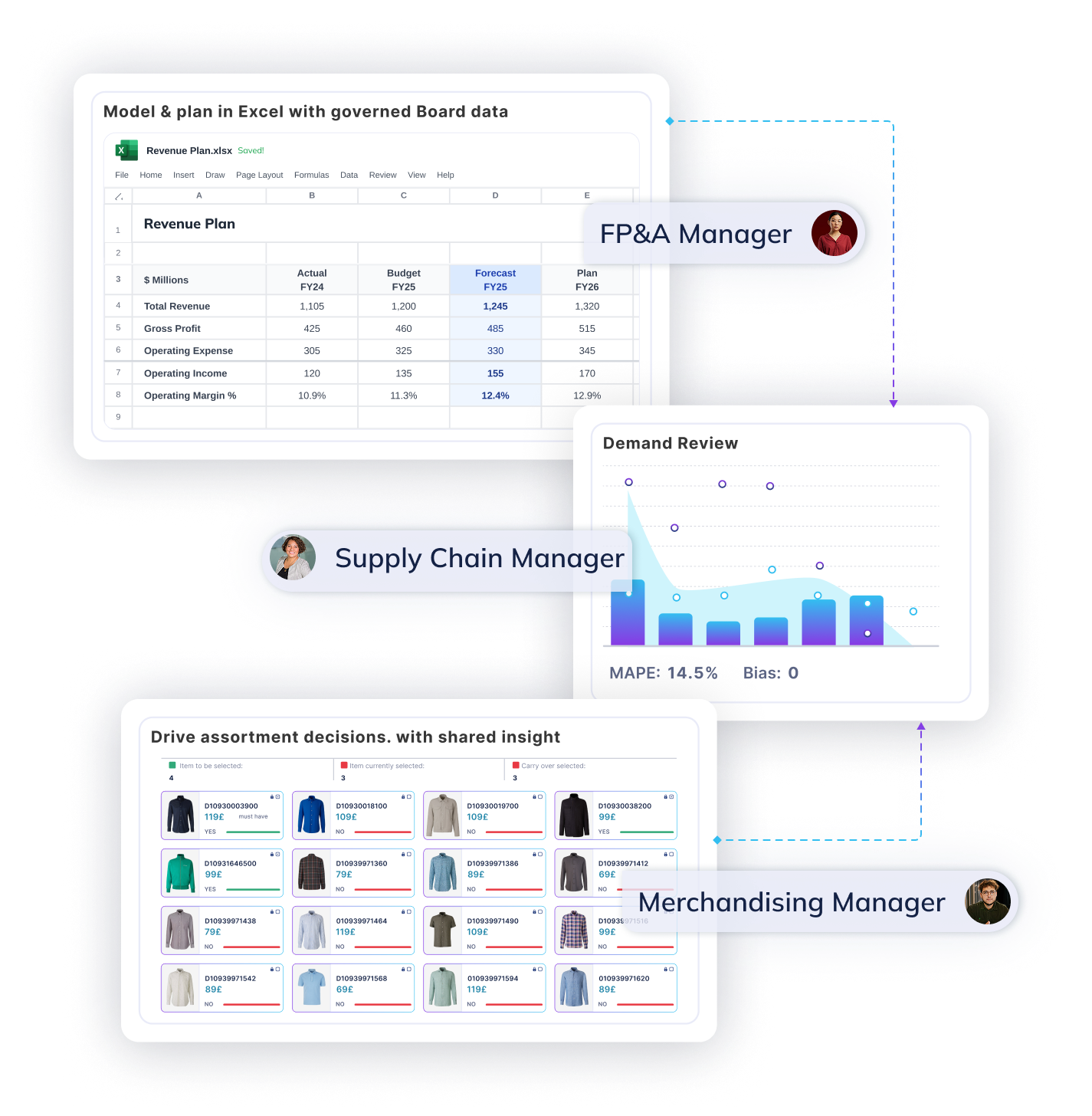
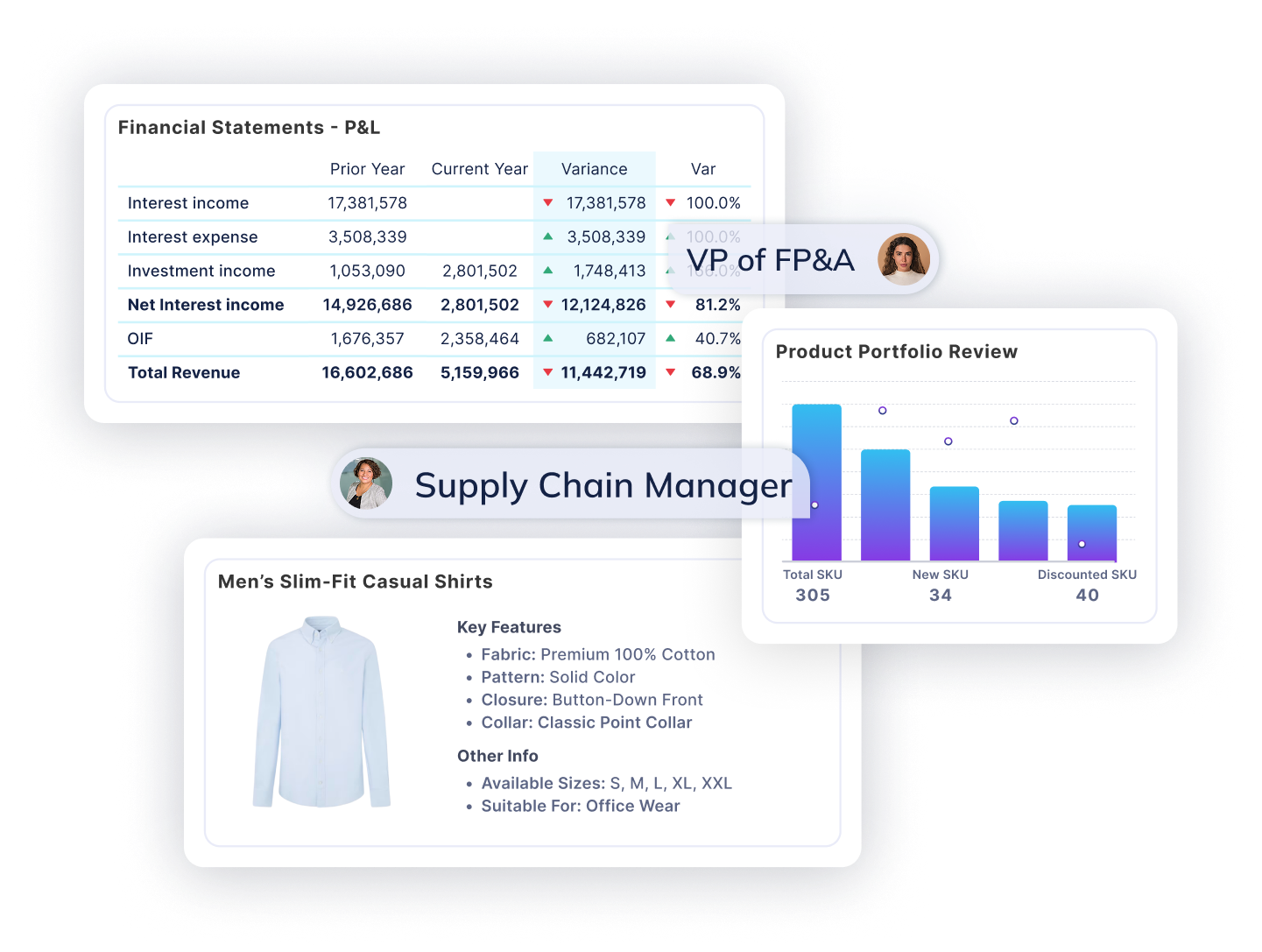
Role-based planning, built for how teams actually work.
Different teams make different decisions. They need experiences designed for their role.
Board supports:
-
Finance planning around strategy, targets, and financial structures
-
Operations planning across demand, supply, and capacity
-
Commercial planning for pricing, promotions, and assortments
All plans:
-
Use shared drivers and assumptions
-
Roll up consistently across the organization
-
Stay aligned without manual reconciliation
Flex Grid: The core planning experience
Flex Grid is the foundation of how teams plan, analyze, and collaborate in Board.
It combines the familiarity of spreadsheets with the scale and governance of an enterprise platform, enabling teams to work on complex, multi-dimensional data without compromise.
With Board Flex Grid:
-
Manage both top-down and bottom-up planning within the same interface
-
Planners can use AI to drill and analyze millions of rows and dimensions interactively
-
Pivot, filter, and analyze data in real time
-
Create visualizations and reports embedded directly into the workflow
Sorry, this video can’t be played right now. Please try again later.
Sorry, this video can’t be played right now. Please try again later.
Board for M365: Your Excel. Your AI. One governed plan
Most finance teams already work in Excel. The challenge is making AI work on governed planning data, not disconnected spreadsheets. Board for Microsoft 365 brings governed AI into the Excel workflows finance teams already know.
With Board for Microsoft 365:
-
Work in familiar Excel environments
-
Keep models, logic, security, and workflows governed in Board
-
Maintain a single source of truth across plans and reports
-
Enable governed AI insights and write-back with full auditability
Board combines Excel flexibility, enterprise governance, and AI-powered planning in one connected experience.
Self-service collaboration at scale.
Board enables business users to explore data, build analysis, and create reports without relying on IT, removing bottlenecks and accelerating decision-making.
Teams can:
-
Use governed AI agents to accelerate planning, forecasting, and scenario modeling
-
Create new views and analysis on the fly
-
Iterate without waiting for configuration
-
Access governed data with full control
As planning matures, collaboration scales with it. Board supports:
-
Thousands of users collaborating simultaneously
-
Granular detail across products, geographies, and time
-
Unlimited scenarios and what-if analyses
-
Continuous, always-on integrated business planning
Collaboration becomes continuous, embedded in daily operations, not limited to static planning cycles.
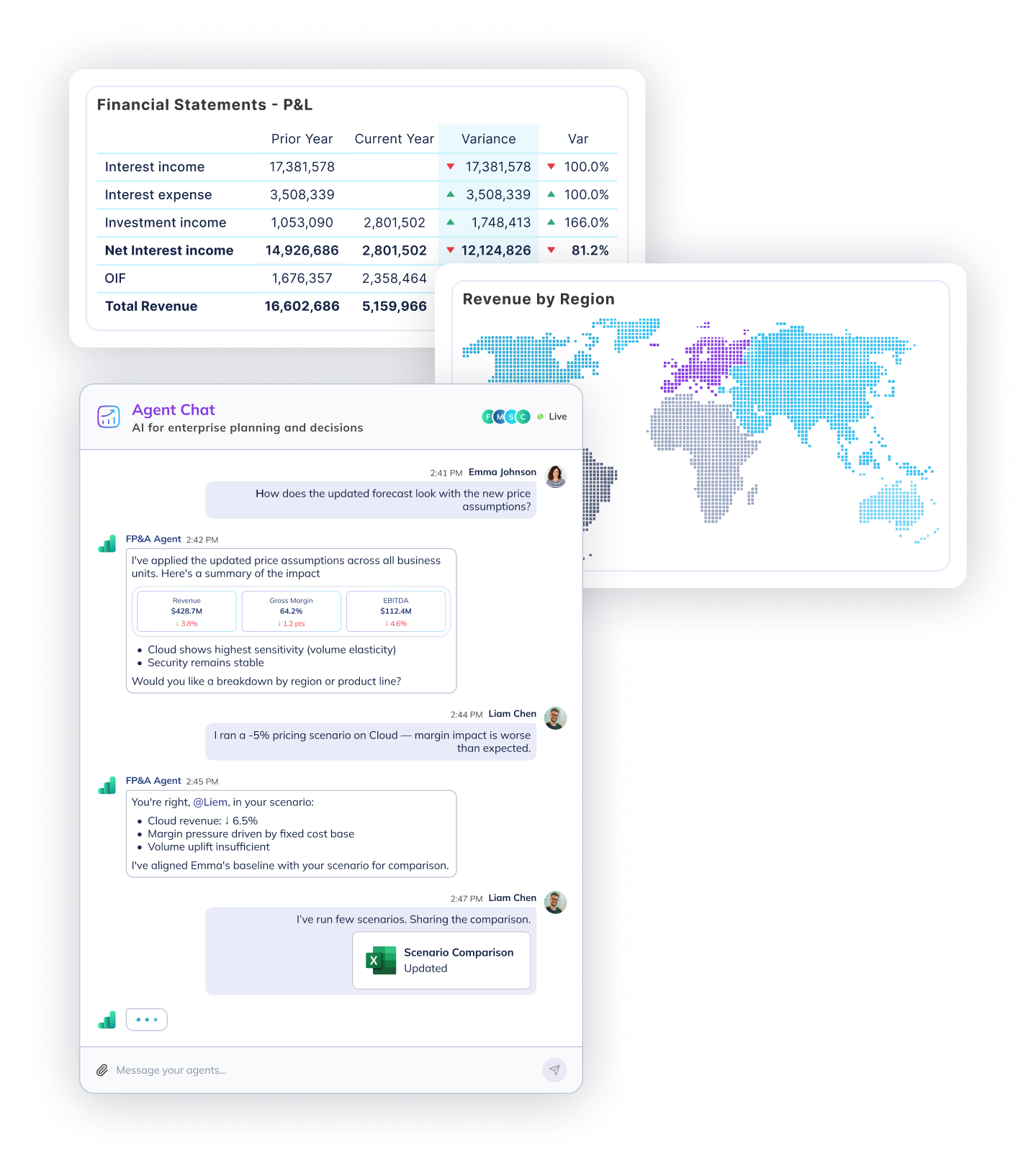
The world’s biggest companies plan with Board.
Granarolo
Mahou San Miguel
Pixartprinting
One unified planning experience across the enterprise
Granarolo unified strategic, financial, and operational planning across sales, logistics, accounting, and purchasing into a single platform. Teams now work from shared data and models, eliminating fragmentation and reducing financial close from 20 days to five. This unified experience enables real collaboration across functions, with faster alignment and more consistent decision-making.
Read the case study
From siloed planning to shared decision-making
Mahou San Miguel moved beyond siloed S&OP processes by connecting sales, marketing, finance, and supply chain in one collaborative planning environment. A shared forecasting process across an 18-month horizon allows teams to align on assumptions, evaluate scenarios together, and make coordinated decisions with full visibility.
Read the case study
Real-time coordination across high-volume operations
Pixartprinting streamlined cross-departmental coordination for thousands of daily print jobs by replacing disconnected processes with a unified planning platform. Teams across operations, production, and commercial functions now work in one system, improving visibility, reducing delays, and enabling faster, more coordinated execution.
Read the case study
FAQs
Explore next:

Let’s see what Board can do for you.
Get a tour of the Agentic Planning Platform in action.